Peruvian Ceviche, But Make It Crunchy: The Chifle Kong Way
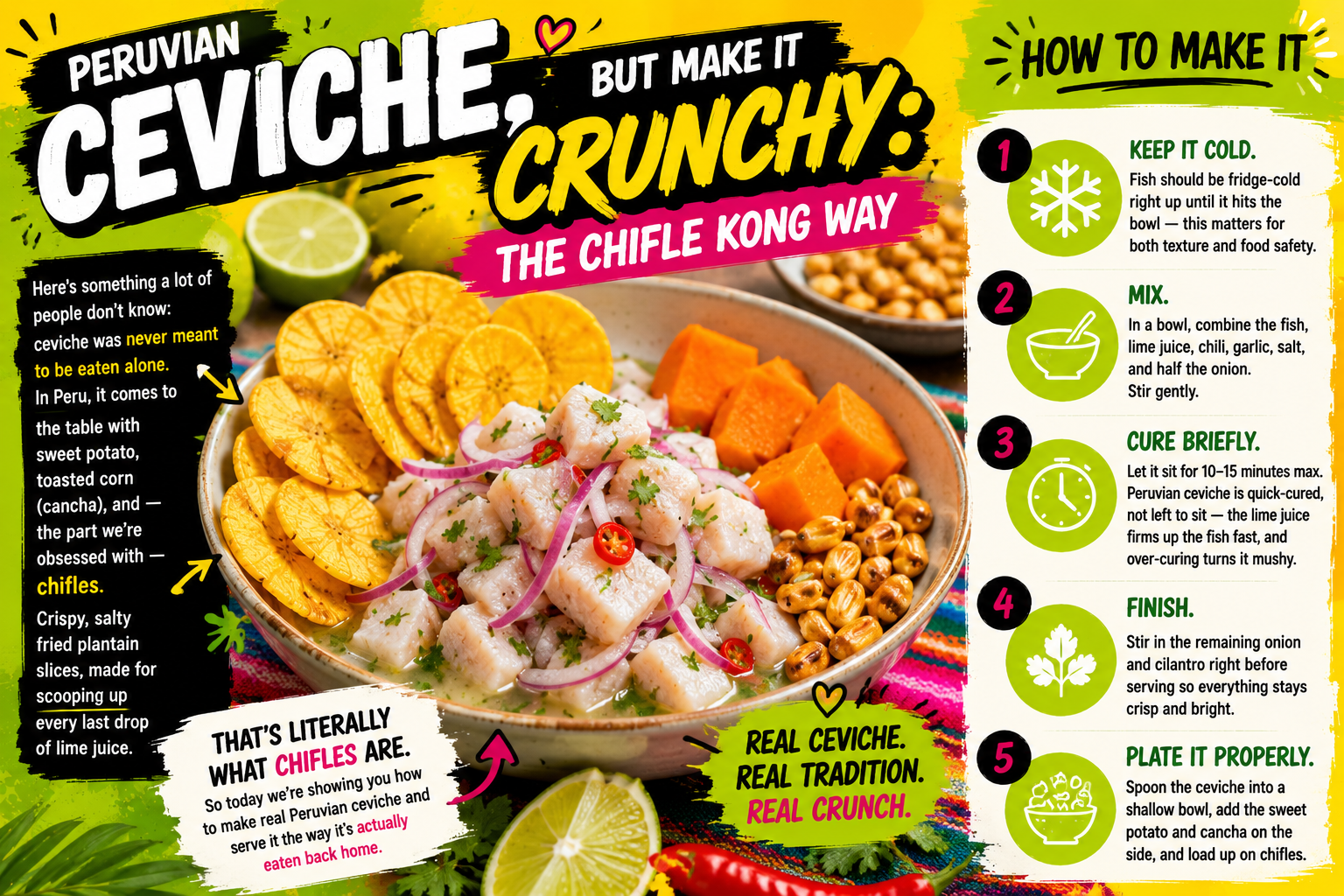
Here's something a lot of people don't know: ceviche was never meant to be eaten alone. In Peru, it comes to the table with sweet potato, toasted corn (cancha), and the part we're obsessed with: plantain chips. Crispy, salty fried plantain slices, made for scooping up every last drop of lime juice.
That's literally what Chifle Kong is. So today we're showing you how to make real Peruvian ceviche and serve it the way it's actually eaten back home.
What You'll Need (serves 2-3)
1 lb fresh, sushi-grade firm white fish (corvina, sea bass, halibut, or mahi mahi), cut into ¾-inch cubes
1 cup freshly squeezed lime juice (about 8-10 limes)
½ red onion, very thinly sliced
1 aji limo or rocoto chili, finely chopped (swap in serrano or habanero if you can't find them)
1 small garlic clove, minced
A handful of cilantro, roughly chopped
Salt, to taste
1 small sweet potato, boiled and sliced
½ cup cancha (toasted corn) or Peruvian choclo, if available
A (700 g) Jar of Chifle Kong - plantain chips
How to Make It
Keep it cold. Fish should be fridge-cold right up until it hits the bowl; this matters for both texture and food safety.
Mix. In a bowl, combine the fish, lime juice, chili, garlic, salt, and half the onion. Stir gently.
Cure briefly. Let it sit for 10-15 minutes max. Peruvian ceviche is quick-cured, not left to sit; the lime juice firms up the fish fast, and over-curing turns it mushy.
Finish. Stir in the remaining onion and cilantro right before serving so everything stays crisp and bright.
Plate it properly. Spoon the ceviche into a shallow bowl, add toasted corn (cancha) on the side, and load up on Chifle Kong chips (The key ingredient).
The Chifle Kong Part
This is the step people skip and shouldn't: use the chips as your scoop. Chifle Kong is made from just plantains, oil, and salt, sturdy enough to hold up to the citrus without going soft, and salty enough to play off the lime perfectly. Crumble a few on top for texture, or just eat straight from the bag between bites. Either way, it's the difference between "good ceviche" and the version you'd actually get in Lima, Peru.
One food-safety note: always buy your fish from a trusted fishmonger and ask specifically for ceviche-grade or sushi-grade cuts, then keep it chilled until the moment you mix it in. Good ceviche starts with ingredients you can actually trust, which, honestly, is the whole reason we started making chips with three ingredients instead of thirty.
Get the Chips
Grab a bag at chiflekong.com and follow @chiflekong on Instagram for more recipes and pairing ideas. This is just the first of many.
Ceviche's the main character. Chifle Kong's the reason it works.