Can Plantains Help With Cholesterol? What the Nutrition Actually Says
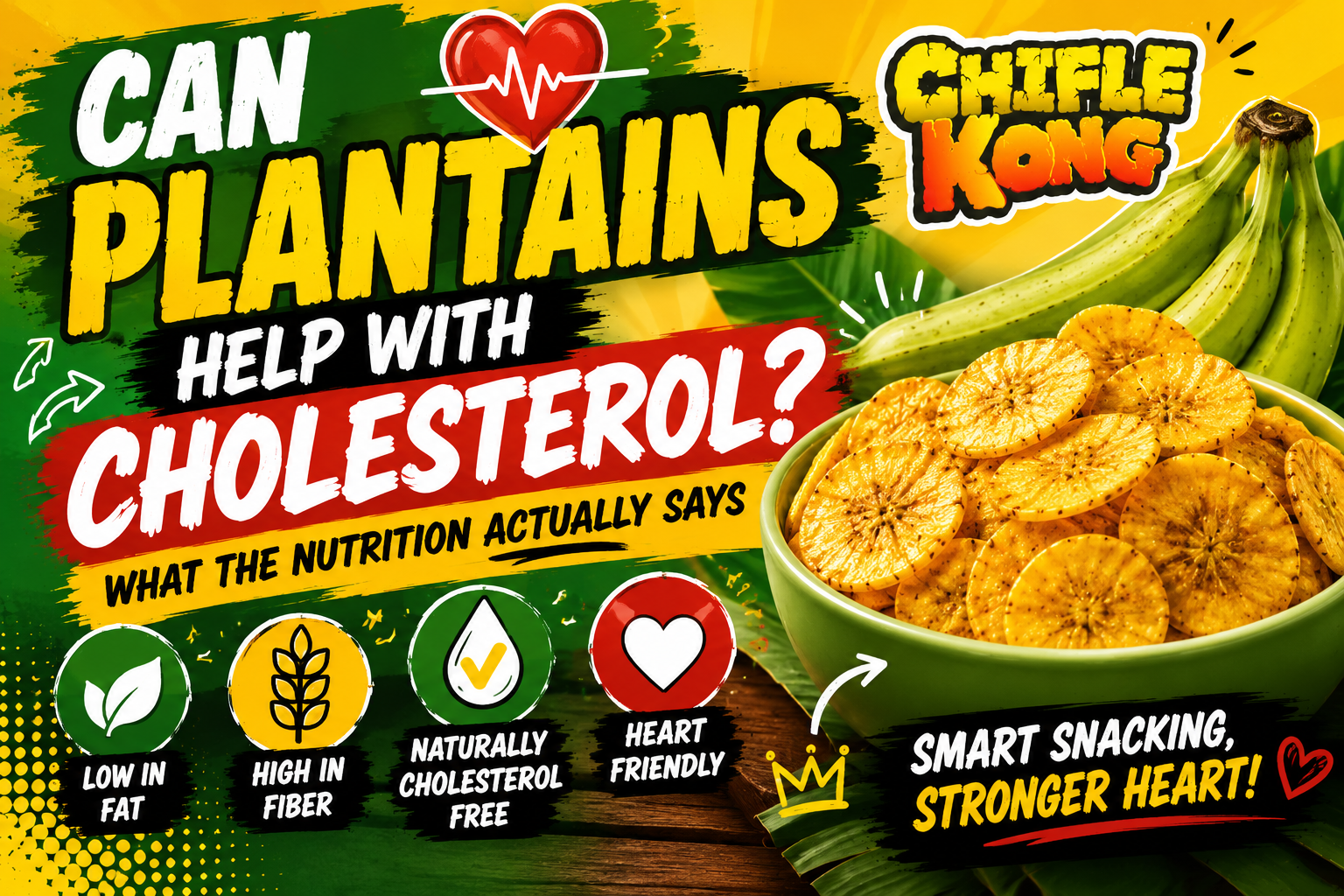
If you've been trying to eat with your cholesterol in mind, you've probably started reading ingredient labels a lot more closely, and plantains might have caught your eye as a "better for you" option. Here's an honest, no-hype breakdown of what plantains actually offer, and where a snack like plantain chips realistically fits into that picture.
First, the Basics: Plantains Are Naturally Cholesterol-Free
Here's a simple fact worth knowing: dietary cholesterol only comes from animal products, meat, dairy, and eggs. Any plant-based food, plantains included, contains zero cholesterol by nature, not because of any special processing or health trend. So right away, swapping an animal-fat-heavy snack for a plant-based one like plantain chips means you're not adding any dietary cholesterol to your plate.
The Fiber Connection
Where plantains get more interesting is in fiber. Plantains contain a meaningful amount of dietary fiber, and fiber, particularly the soluble kind found in many fruits and vegetables, is well-established in nutrition science as something that supports healthy cholesterol levels as part of an overall balanced diet. Soluble fiber can help reduce the amount of LDL ("bad") cholesterol the body absorbs from food.
To be clear and accurate: this doesn't mean eating plantains "cures" high cholesterol or replaces medical treatment; no single food does that. But choosing fiber-rich foods over refined, low-fiber snacks is a genuinely well-supported dietary habit for supporting heart health over time.
Potassium: The Other Piece of the Puzzle
Plantains are also naturally rich in potassium, a mineral that supports healthy blood pressure regulation. While blood pressure and cholesterol are two different things, they're both part of the same overall cardiovascular health picture, so a potassium-rich food is a reasonable addition to a heart-conscious diet.
Where Plantain Chips Fit In — Being Honest About It
Here's the part most snack brands won't tell you directly: a fried chip is still a fried chip. Whole, boiled, or baked plantain retains more of its natural fiber-to-fat ratio than a fried chip does, since frying adds fat calories that the raw fruit doesn't have. That's just true, and it's worth knowing rather than glossing over.
What we can say honestly about Chifle Kong specifically: our chips are made with 100% natural ingredients, no artificial colors, no trans fats, and nothing animal-derived, so you're not adding dietary cholesterol or synthetic additives to your snacking, and you're still getting some of the natural fiber and potassium plantains bring to the table. Like any fried snack, they're best enjoyed as part of an overall balanced diet, not as a replacement for whole foods or medical guidance on managing cholesterol.
The Bottom Line
If you're making cholesterol-conscious choices, plantains, especially in their whole, boiled, or baked form, are a genuinely solid, fiber-rich, naturally cholesterol-free option. Plantain chips like Chifle Kong can absolutely be part of that lifestyle in moderation, made with natural ingredients and nothing artificial hiding in the bag. As always, if you have specific cholesterol concerns, a conversation with your doctor or a registered dietitian is the right next step for personalized guidance.